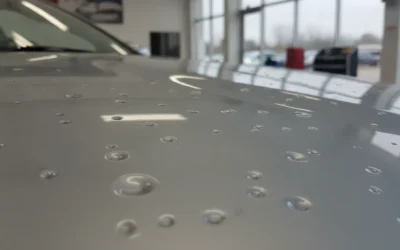

Minor dents from hail damage or dings you pick up while driving around town can detract from the appearance of your vehicle, and if left unrepaired, can lead to expensive restoration costs in the future. For anyone living in Colorado, especially around Denver, the Front Range, and suburbs such as Arvada or Centennial, hailstorms can leave vehicles peppered with impact marks, along with deeper structural damage. After a storm like this, many driver search for “dent repair near me” because they want a fast, affordable way to fix minor dents without repainting their vehicle.
However, if your dents have caused cracked paint, paintless dent repair is no longer an option. The last thing you want is to escalate your repairs to traditional car dent repair, which typically involves replacing a panel or sanding and repainting the original damage. In this article, we’ll look closer at the hidden costs of conventional dent repair and why paintless dent repair is, by far, the better option if your car qualifies for it.
For Anyone Needing Dent Repair
Not all dents and dings are the same, because there are infinite variations in depth, width, and severity. If you’re trying to figure out which type of repair you need, you’re not alone because many other people are in your shoes, including:
- Drivers dealing with minor dents or dings from hailstorms, parking lots, or everyday wear
- Vehicle owners preparing to sell or trade in a car who want to protect its resale value
- Anyone comparing traditional body work to paintless dent repair, and trying to understand the actual cost differences
If any of these scenarios resonate with you, you’ll be interested in learning about how traditional paintless dent repair in Denver compares in terms of pricing and other costs.
The Hidden Costs of Traditional Dent Repair Methods
Traditional dent repair can feel like opening a can of worms. Despite the technician’s best efforts to keep the job on budget, one repair can lead to another, which adds up. A few dents can lead to the discovery of others, which in turn creates more repairs.
For this example, we’ll look at a common scenario: a minor dent that goes unrepaired for months and eventually develops chipped or cracked paint, making traditional dent repair necessary and introducing the following costs:
Paint and Refinishing Expenses Add Up
Attempting to color-match the factory paint on your car is almost impossible. Autobody specialists often come close, but it’s nearly impossible to get the paint back to the original because:
- Surface preparation adds labor time: Sanding, grinding, and smoothing the damaged area are necessary before applying paint, even to minor dents with chipped paint.
- Matching factory paint is time-consuming and costly: Color blending and finish matching often require specialized materials and multiple attempts to achieve a seamless result.
- Multi-step refinishing process: Primer, paint, and clear coat must be applied and cured in stages, which extends the repair time and increases labor costs.
- Minor dents can trigger the need for complete panel repainting: To avoid visible color differences, shops may repaint the entire panel rather than spot-repairing the damage.
Longer Repair Times Mean More Inconvenience
Traditional dent repair can be time-consuming, especially when compared to paintless dent repair for the following reasons:
- Repair time: Vehicles are often kept for several days or longer, even for relatively minor damage. For more complex repairs, your vehicle could be out of commission for a couple of weeks.
- Sanding and priming: Drying and curing times between sanding, priming, painting, and clear coating slow the process. Drying time depends on the number and extent of the repairs.
- Additional damage: Delays may occur if further damage is discovered during the repair process. It’s not unusual for more damage to be found as the initial repairs get underway.
- Rental car costs: Extended repair timelines may lead to rental car costs or transportation hassles. It’s challenging to be without transportation, and eventually, your insurance will stop covering the price of a rental.
The hidden costs of traditional dent repair aren’t only financial. They’re also time and disruption.
Traditional Repairs Can Impact Your Car’s Resale Value
The ultimate fallout of conventional dent repair is in the effect it has on the value of your vehicle. Number one on the list of things that will decrease the value of your car is a new paint job, which raises suspicions in potential buyers and other problems:
- Vehicle history: Repainted panels may be flagged during inspections or show up on vehicle history reports
- Factory paint preference: Buyers and dealers often prefer cars with original factory paint
Suspicions of past damage: Refinished areas can raise questions about past damage, even if the dent was minor - Lower value: Reduced buyer confidence can translate into lower resale or trade-in offers
Why Paintless Dent Removal Saves You Money
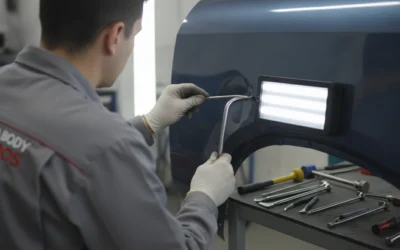
Paintless dent repair (PDR) eliminates the need for a new paint job and, when performed correctly, can make it appear as though the dent never existed. Trained technicians use specialized tools, like long rods with rounded ends, along with hand manipulation to massage and tap dents back into place from behind the panel.
Because the process avoids sanding, filling, and repainting, PDR is typically much faster than traditional dent repair, often taking only an hour or two, depending on the number and severity of dents being repaired.
However, not every dented vehicle is a candidate for paintless dent repair. The following criteria generally need to be met:
- The paint surface must be intact: PDR works best when the factory paint is not cracked, chipped, or peeling.
- The dent must be shallow enough: Minor dents, dings, and creases where the metal has not been severely stretched are ideal candidates.
- The damaged panel must be accessible: Technicians need access behind the panel to manipulate the metal back into shape properly.
Get Your Dents and Dings Fixed Fast With Mile High Dents
Traditional dent repair can be costly and time-consuming because a minor ding with cracked paint often requires the same sanding, painting, and refinishing steps as more extensive damage. Mile High Dents has been quickly repairing minor dents using paintless dent repair for decades. Back in the 1980s, we were among the first to utilise PDR, which means our technicians have a long history with the techniques and tools necessary to remove dents as if they had never been there.
PDR is both a science and an art, and Mile High Dents has the most skilled technicians in the Denver area. Hop online and get a free quote for your paintless dent repair services or call (720) 772-0133 to talk with a specialist directly. Skip the paint booth and get your car looking great and back on the road in no time.
For more information, explore our hail damage repair at Mile High Dents — Denver’s trusted specialists for fast, professional dent repair.

At Mile High Dents, we specialize in paintless dent repair (PDR) for all types of vehicles across the Denver metro area. Whether you’re dealing with hail damage, an annoying door ding, or a larger dent, our expert technicians restore your vehicle to like-new condition without repainting, sanding, or fillers.