The easiest way to avoid a hail repair scam is to ignore anyone who comes to you. Legitimate shops do not chase storms door to door, pressure you to sign on the spot, or ask for cash up front. If a repair offer involves an uninvited visit, an out-of-state operator, urgency, advance payment, or a promise that sounds too good to be true, treat it as a red flag and choose an established local shop instead.
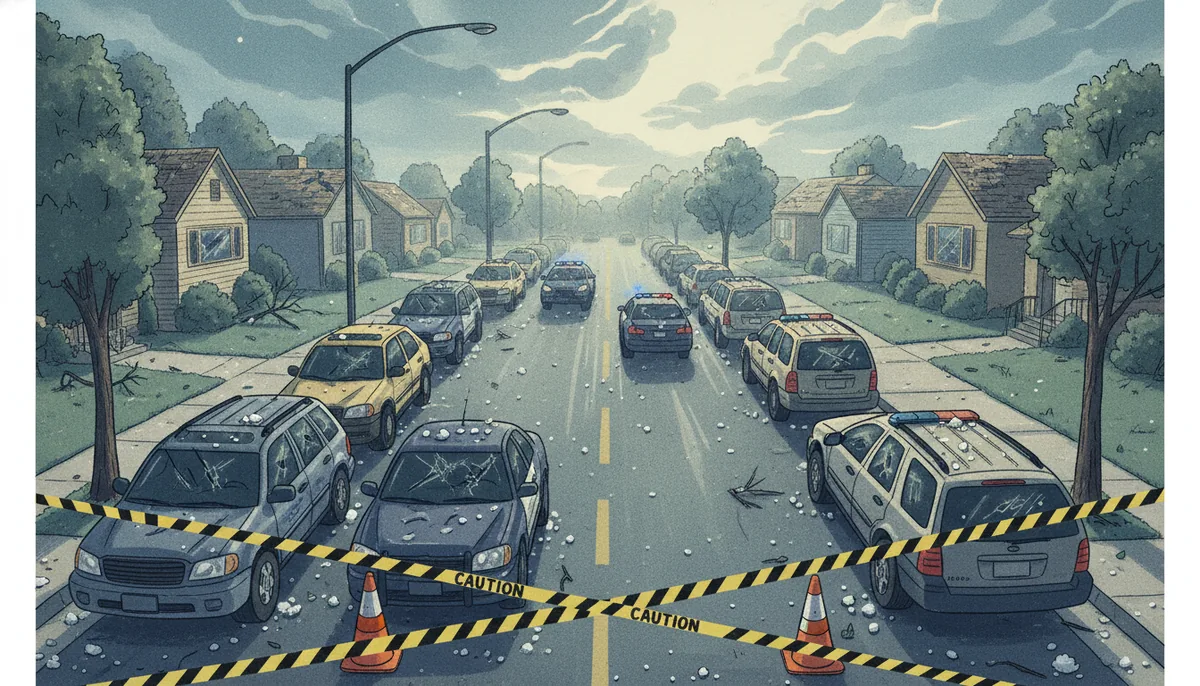
Colorado ranks near the top of the country for hail damage, and after every major Front Range storm, out-of-town operations descend on Denver to cash in. Some do shoddy work, some take your money and vanish, and some pull you into insurance problems you did not sign up for. Here are the five red flags to watch for, and how to protect yourself and your vehicle.
Red Flag 1: They Came to You
The single biggest warning sign is an unsolicited approach. Storm chasers go door to door, leave flyers on windshields, or set up temporary lots right after a storm, specifically targeting people who are stressed and want the damage gone fast. A reputable repair shop does not need to knock on your door after a storm; you come to them, or you find them through reviews and referrals. If someone shows up uninvited, especially with an out-of-state license plate, be skeptical from the first word. Out-of-state plates are a classic tell that the operation will be gone the moment the work dries up.
Red Flag 2: High-Pressure, Sign-Right-Now Urgency
Scammers rely on urgency because it stops you from doing the homework that would expose them. Watch for lines like the price is only good today, your insurance window is closing, or they can only fit you in if you commit right now. None of that is true. You have time to get more than one opinion, check the shop out, and understand what you are signing. Anyone pushing you to decide immediately is managing you, not helping you.
Red Flag 3: They Want Cash Up Front
Be very cautious with any operator who asks for a large cash payment before the work is done, or offers a discount for paying in advance. This is one of the most common ways these schemes end: you pay, and the work is never finished or never started, and the person becomes impossible to reach. Pay with a credit card when you can, so you have recourse if something goes wrong, and never hand over a stack of cash to someone who showed up in your neighborhood yesterday.
Red Flag 4: No Verifiable Local Presence
A trustworthy shop has roots you can check: a real physical address in the Denver area, a track record of genuine reviews, verifiable credentials, and a phone number a real person answers. Storm chasers typically have none of that: a cell phone, a magnetic sign on a truck, and a vague answer when you ask where their shop is. Before you let anyone touch your car, look them up and run through these questions to ask a dent repair shop. If you cannot find a real local business behind the pitch, or they get hard to reach the moment you have questions, walk away.
Red Flag 5: Promises That Sound Too Good to Be True
If an offer seems too good to be true, it usually is. Be especially wary of anyone who waves off the details and promises to make the whole thing cost you nothing by handling the insurance however it takes. Padding or inflating an insurance estimate is fraud, and as the vehicle owner, you can end up exposed when it unravels, not the person who skipped town. A legitimate shop is transparent about the estimate (here is what a legitimate hail damage estimate includes), works honestly with your insurer, and never asks you to go along with something that feels off. Quality is the other half of this: a price far below everyone else usually means corners get cut, and poor hail work can leave your vehicle looking worse than before.
How to Protect Yourself
Avoiding these scams is mostly about slowing down and controlling the process yourself:
- Choose your own shop. Colorado law (C.R.S. 10-4-120) protects your right to pick the repair facility; your insurer cannot force you to use theirs, and you never have to use a storm chaser.
- Use a local, established shop with real reviews and a physical address you can visit.
- Get the estimate and the work in writing before anything begins.
- Do not pay large sums in cash up front; use a credit card when possible.
- Read anything before you sign it, and do not sign over your insurance claim to someone you just met.
- Know your rights: the FTC Cooling-Off Rule generally gives you three business days to cancel many sales made at your home or at a temporary location, so pressure to sign immediately is never necessary.
- Let a reputable shop work with your insurer directly, so the claim is handled correctly.
Work With a Trusted Local Shop Instead
The simplest protection against a storm chaser is to already know who you are going to call. Mile High Dents is a local Denver-area shop that has repaired hail damage since the late 1980s, with a real address, a real team, and a track record you can check. We handle the hail claim process properly, coordinate directly with your insurance company, and offer free pickup and delivery, so you never have to deal with someone who showed up in your driveway. See how our hail claim and repair process works, learn how to file a claim the right way, or reach out with questions.
Frequently Asked Questions
How do I avoid hail repair scams?
Ignore anyone who approaches you uninvited, never pay cash up front, do not sign under pressure, and verify the business has a real local address and genuine reviews. Choose your own established local shop rather than a storm chaser who came to you.
Are door-to-door hail repair offers a scam?
Not always, but unsolicited door-to-door solicitation after a storm is the most common hallmark of storm chaser operations. Legitimate shops rarely need to canvass neighborhoods. Treat an uninvited pitch as a reason for extra caution and do your homework before committing.
Do I have to use the shop my insurance recommends?
No. In Colorado, you have the right to choose your own repair shop (C.R.S. 10-4-120). Your insurer can suggest one, but the decision is yours, which means you never have to accept a storm chaser or a shop you do not trust.
What do I do if I already signed with a storm chaser?
Act quickly. The FTC Cooling-Off Rule generally gives you three business days to cancel many sales made at your home or at a temporary location, so review what you signed right away. If you are unsure, contact your insurer and, if needed, the Colorado Division of Insurance or the Better Business Bureau for guidance.
Why are there so many hail repair scams in Denver?
Colorado is one of the most hail-prone states in the country, so major storms create a surge of damaged vehicles all at once. That overwhelms local shops and creates an opening that out-of-state operators move in to exploit.
Don’t Let a Storm Chaser Near Your Car
After a hailstorm, the safest move is to skip the knock at your door and call a local shop you can verify. Mile High Dents has served Denver drivers for decades and handles your repair and your claim the honest way. Contact us at (720) 772-0133 to get started.

At Mile High Dents, we specialize in paintless dent repair (PDR) for all types of vehicles across the Denver metro area. Whether you’re dealing with hail damage, an annoying door ding, or a larger dent, our expert technicians restore your vehicle to like-new condition without repainting, sanding, or fillers.