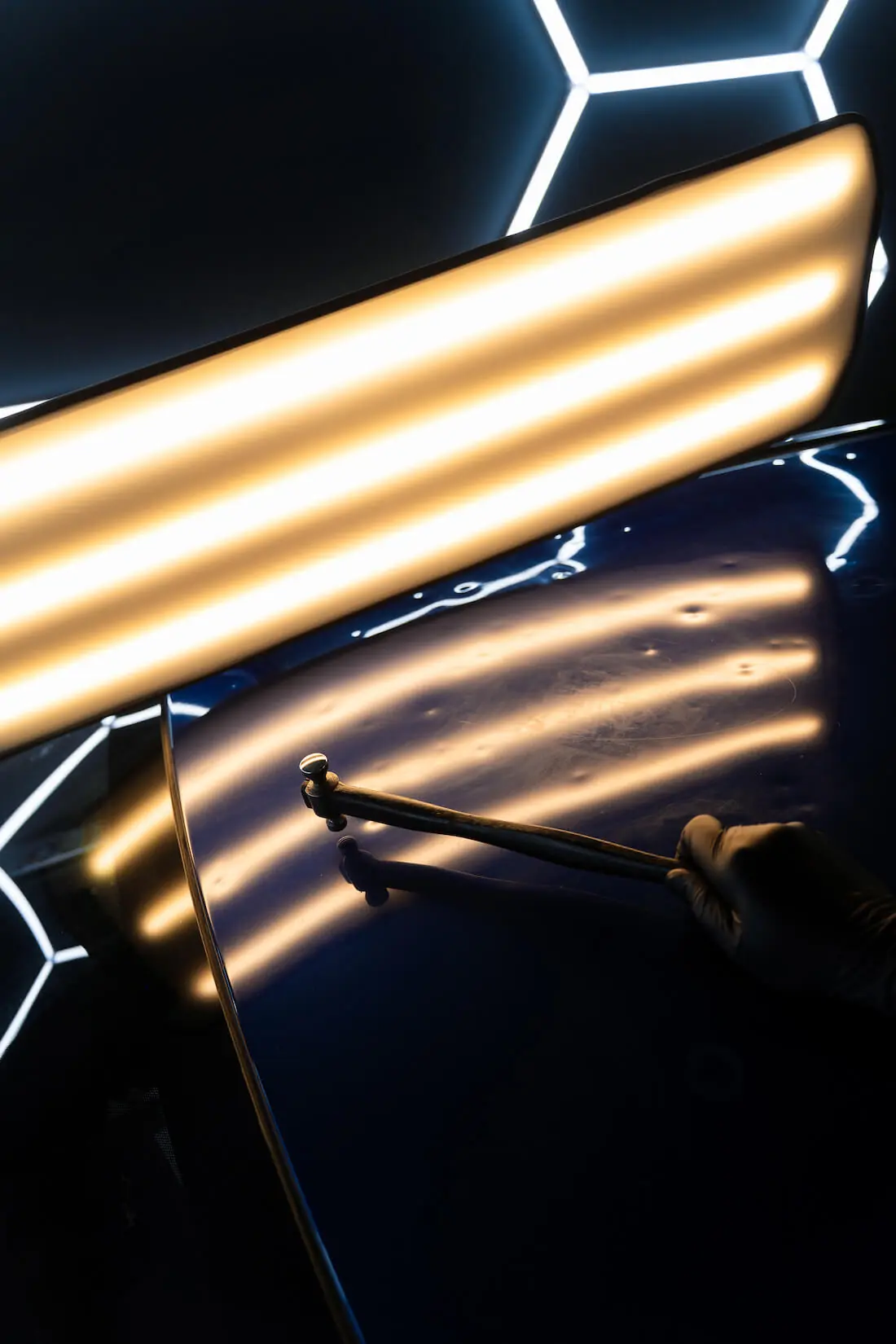
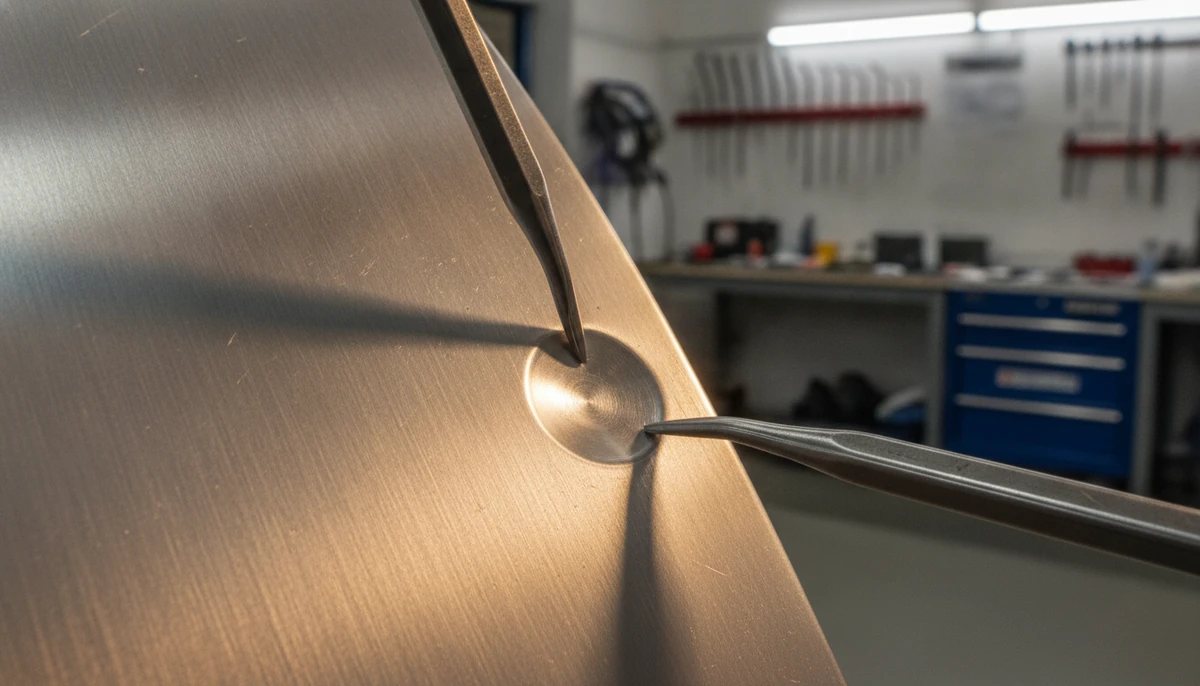
Yes, paintless dent repair can be done on aluminum panels, but it is more difficult than repairing steel and requires a specially trained technician. Aluminum does not behave like steel: it has less memory, it hardens as it is worked, and it needs controlled heat and specialized tools. The repair is very possible, it just takes more skill, time, and the right experience, which is exactly why not every shop does it well.
If you drive a newer vehicle, there is a good chance some of its body panels are aluminum, and that changes how a dent should be repaired. Here is what makes aluminum harder to work than steel, why it matters for your repair, and when PDR is and is not the right call.
Can You Do Paintless Dent Repair on Aluminum?
Yes. A trained PDR technician can repair most dents in aluminum panels without painting, preserving your vehicle’s factory finish just as with steel. The difference is in the difficulty. Aluminum responds to the PDR process differently at a fundamental, metallurgical level, so the same dent that is routine in a steel door can be a demanding job in an aluminum one. It is not about whether PDR works on aluminum; it is about whether the technician has the training and tools to do it correctly.
Why More Cars Have Aluminum Panels Now
Automakers have shifted toward aluminum body panels to reduce weight, thereby improving fuel economy, performance, and range. The trend accelerated around 2015, when Ford moved the F-150 to an aluminum body, and it is now common across trucks, luxury vehicles, and electric vehicles like Teslas, often on hoods, doors, and other large panels. Many modern cars are mixed-material, using aluminum in some panels and steel in others, which means two dents on the same vehicle can require two different approaches. If your car is a 2015 or newer model, it is worth knowing whether the damaged panel is aluminum before any repair begins.
How Aluminum Behaves Differently From Steel
The reason aluminum is harder to repair comes down to how the metal behaves under a technician’s tools:
- It has less memory. Steel wants to return to its original shape, which works in a technician’s favor during PDR. Aluminum does not have that same memory, so it has to be coaxed and manipulated far more to move back into place.
- It work-hardens. As aluminum is worked and changes shape, it tends to harden, which makes it progressively more difficult to move and leaves less room for error. A mistake is harder to undo than it would be in steel.
- It is stiffer and springs back. Aluminum is more rigid and tends to spring back, which makes a dent harder to stabilize into its final shape.
- It is heat-sensitive. Aluminum generally requires carefully controlled heat, kept within the automaker’s allowable range, to be worked safely, whereas steel is far more forgiving.
What That Means for Your Repair
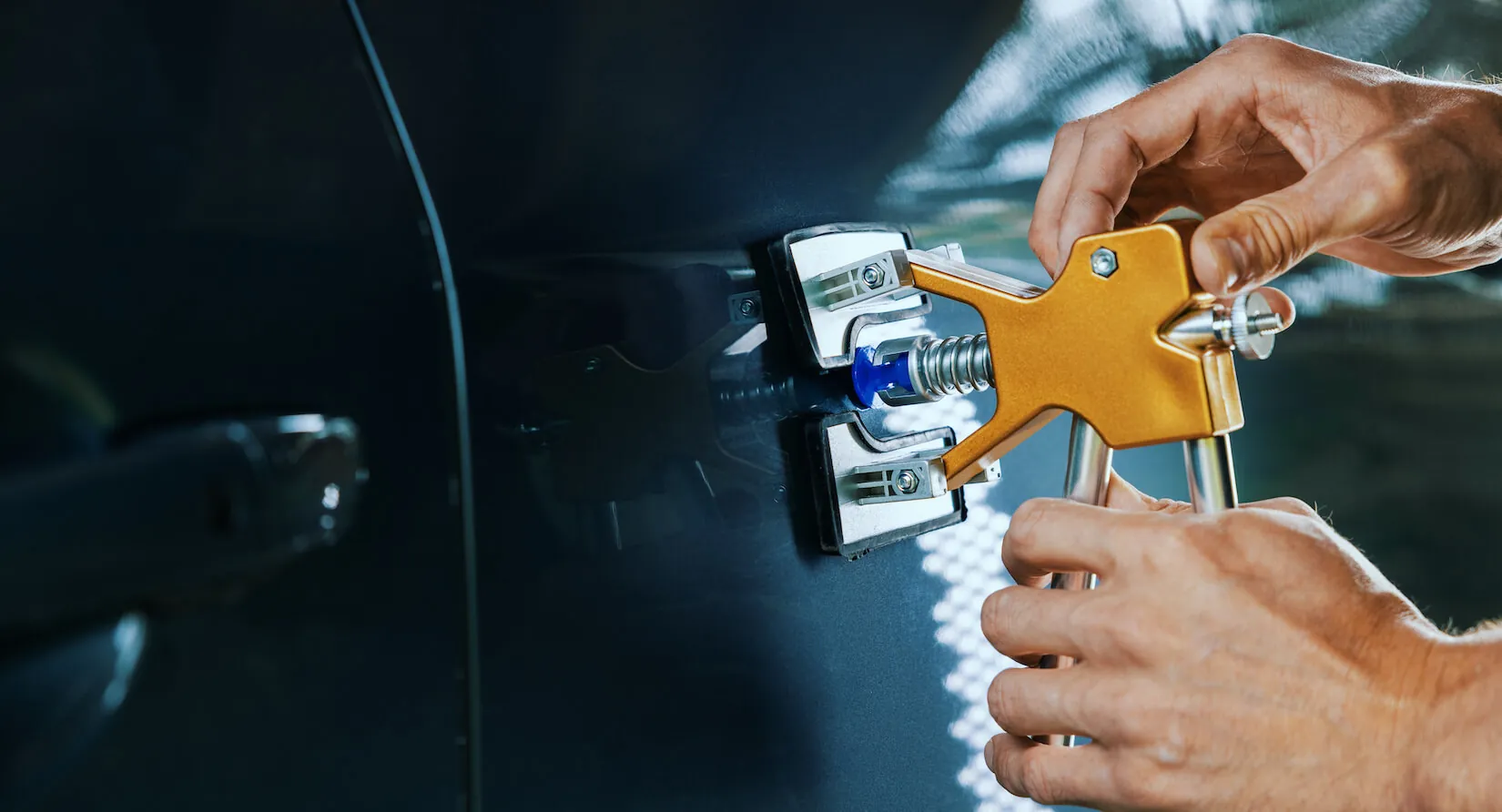
Those properties translate into real differences in how the job is done. Aluminum PDR takes more time because the metal has to be moved more gradually and deliberately. It often calls for controlled heat applied within OEM limits and specialized non-magnetic tools with softer tips and greater finesse than standard steel PDR tools. Because some aluminum panels have limited access from behind, technicians frequently use glue-pull techniques, working the dent from the outside with adhesive tabs rather than pushing from the back. All of this demands specific training. Skill with steel does not automatically transfer to aluminum, and the stakes are higher because errors are hard to reverse. This is why aluminum repair is a genuine specialty that a general shop without aluminum-specific training should not treat as routine.
When Aluminum Dents Can’t Be Fixed With PDR
Part of being good at this is being honest about the limits. PDR is the ideal fix when the panel’s finish is intact, and the metal has not been pushed beyond what it can recover from. On aluminum, PDR is usually not the right call when:
- The metal is stretched, which aluminum generally cannot recover from
- The panel is torn or cracked
- There are sharp, deep creases beyond what the metal can safely take
- The paint or clear coat is cracked or chipped, which PDR does not address
In those cases, conventional body repair or panel replacement following the manufacturer’s procedures is the correct path, and a trustworthy shop will tell you so rather than force a PDR that will not hold. For the hail dents most Colorado drivers deal with, though, aluminum panels are very often excellent PDR candidates.
Why Choosing a Trained Shop Matters
With aluminum, the shop you choose matters more than ever. The right technician has the training, the non-magnetic tools, and the experience with your type of vehicle to repair the panel without damaging it, and the judgment to tell you honestly when PDR is not the answer. The wrong one can make a repairable panel worse. At Mile High Dents, we have repaired dents, including the aluminum panels on today’s vehicles, for decades, and we assess every dent on its own merits to recommend the right repair rather than a one-size-fits-all fix. See how our hail claim and repair process works, or reach out for an honest assessment of your vehicle.
Frequently Asked Questions
Can you do paintless dent repair on aluminum?
Yes. PDR works on aluminum panels and preserves the factory finish, but it is more difficult than steel and requires a specially trained technician with the right tools. Most dents in intact aluminum panels, including hail dents, are good PDR candidates.
Why is aluminum harder to repair than steel?
Aluminum does not have steel’s memory, so it must be manipulated more to return to shape. It also work-hardens as it is worked, it is stiffer and springs back, and it needs controlled heat. Together, those properties make the repair slower and less forgiving.
Does my car have aluminum body panels?
Many 2015 and newer vehicles do, especially trucks like the Ford F-150, luxury vehicles, and EVs such as Teslas, often on hoods and doors. Many cars mix aluminum and steel panels. A knowledgeable shop can identify which panels on your vehicle are aluminum.
Is aluminum dent repair more expensive?
It can take more time and specialized skill than steel, which can affect the repair. The best approach is to get an assessment of your specific damage. For insurance hail claims, the repair is handled through your claim.
Can every PDR shop repair aluminum?
No. Aluminum requires training and tools that not every technician has, and skill with steel does not automatically carry over. Always choose a shop with genuine aluminum experience for an aluminum panel.
Get an Expert Assessment of Your Dent
Newer vehicles are more complex to repair, and aluminum panels are a big reason why. Mile High Dents has the experience to handle aluminum dent repair correctly and the honesty to tell you when a different approach is better. Contact us at (720) 772-0133 for an expert look at your vehicle.

At Mile High Dents, we specialize in paintless dent repair (PDR) for all types of vehicles across the Denver metro area. Whether you’re dealing with hail damage, an annoying door ding, or a larger dent, our expert technicians restore your vehicle to like-new condition without repainting, sanding, or fillers.